When people come to us in the early stages of planning a new kitchen, the first things they want to talk about are usually the visible ones. Colours, worktops, handles. Those are the enjoyable choices and they matter a lot.
Layout tends to come into the conversation a little later. But it’s the decision that shapes how the kitchen actually works every day. A good layout means you’re moving naturally between the sink, the hob and the fridge without doubling back on yourself. It means worktops stay clearer because storage is in the right place. It means two people can use the kitchen at the same time without getting in each other’s way. And in an open plan home, it determines how the kitchen connects to the rest of the room, whether it feels like part of the house or separate from it.
These aren’t things you tend to notice when a kitchen is working well. You just feel comfortable in the space.
Your room is the starting point. Where the doors and windows sit, where the plumbing runs, how the space connects to the rest of the house. We always work with those things rather than around them. A kitchen designed carefully within its actual space feels far more considered and personal than one that follows a formula. And often the constraints of a particular room lead to the most interesting results.
Single Wall
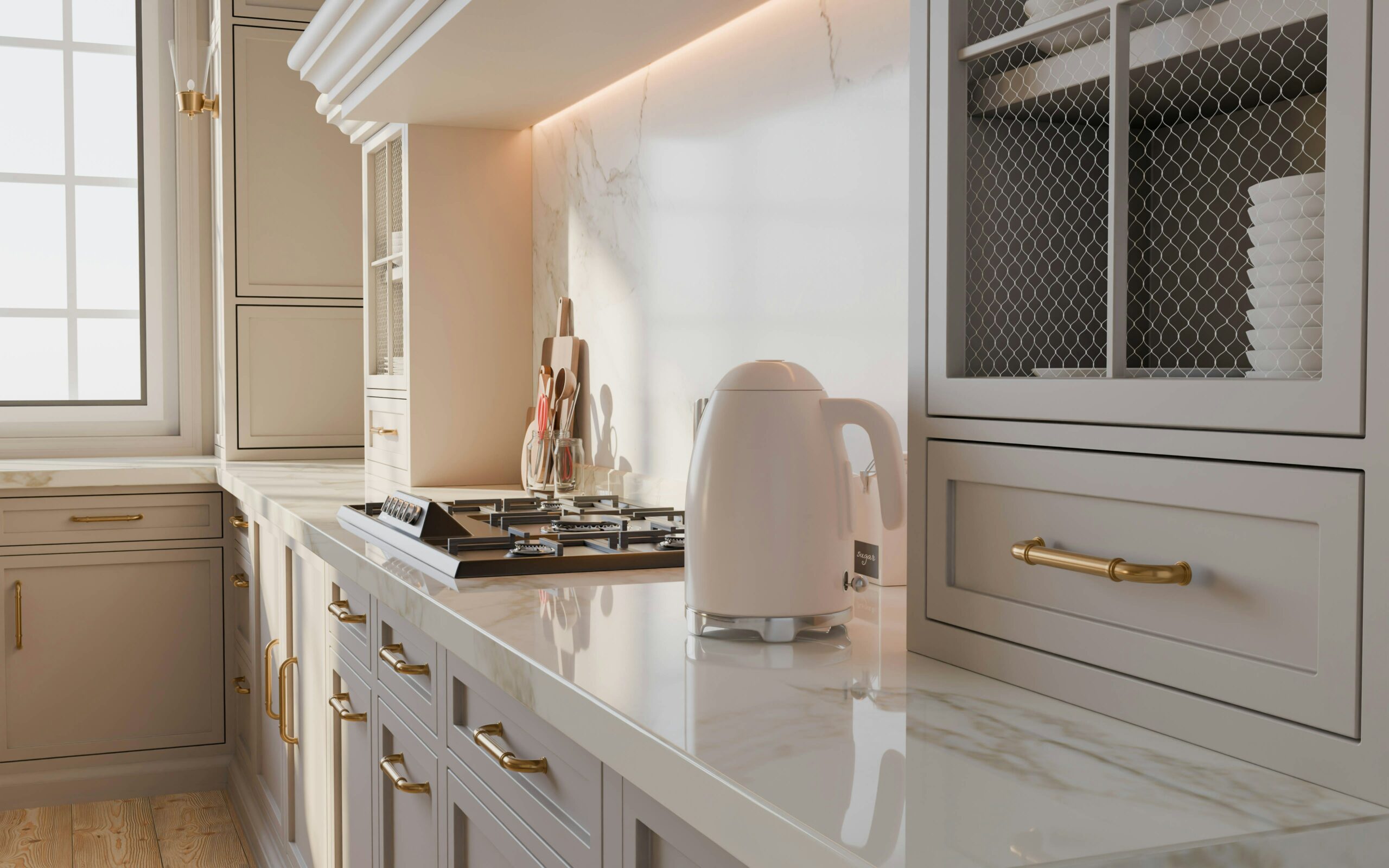
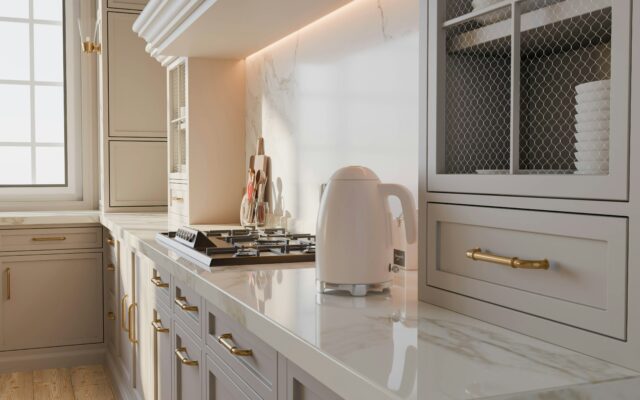
Everything along one wall. Clean, unobtrusive, and particularly well suited to open plan spaces where the kitchen needs to sit quietly within the wider room, rather than dominate it.
Storage does more work here than in any other layout. Tall units, well-designed internal storage and careful spacing make the difference between a kitchen that feels considered and one that feels like it’s running out of room. Get those things right and a single wall kitchen can be one of the most elegant results we produce. It’s also one of the layouts where a really well-planned worktop run makes a significant difference, giving you a long, clear preparation surface that’s easy to keep tidy.
Galley
Two parallel walls with a central walkway between them. One of the most efficient layouts for cooking because everything is close at hand and easy to reach without crossing over yourself. The distance between the sink, hob and fridge is short, which makes everyday cooking feel quick and easy.
The width of that central walkway is everything. Too narrow and it feels restrictive, particularly with two people in the space. The sweet spot is usually around 1.2 metres between units. Get that right and a galley kitchen becomes a focused, practical space that works quietly and seamlessly every single day.
L-Shaped
Two adjoining walls, which opens up the rest of the room. It suits open plan spaces and kitchens that connect to a dining or living area, giving you a good working area without closing the room off.
The natural corner that an L-shape creates is useful preparation space, and the open side of the room gives you flexibility. Keep it simple or bring in an island if there’s space. It works in a wide range of homes, which is part of why it’s one of the layouts we design most often. It also tends to give a good balance between worktop space and clear floor area, which makes the kitchen comfortable to move around in.
U-Shaped
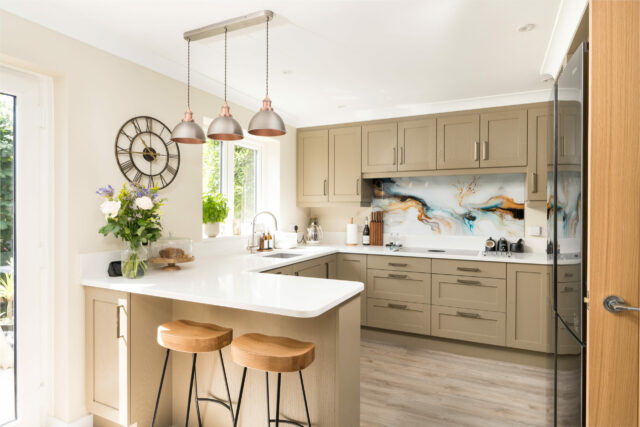
Three sides of the room. Generous worktop space, generous storage, and everything within easy reach. For people who cook regularly, that practicality is hard to beat. You’re never far from what you need, and there’s usually enough room to have everything you use regularly within arm’s reach, without cluttering the worktop.
The proportions need thought though. In a smaller room, a U-shape can feel enclosed if the spacing between units is too tight. Opening one side or introducing a break in the run of units can change the feel of the space significantly. In a larger room it creates a very comfortable, contained working area that suits families and people who spend a lot of time cooking.
Peninsula
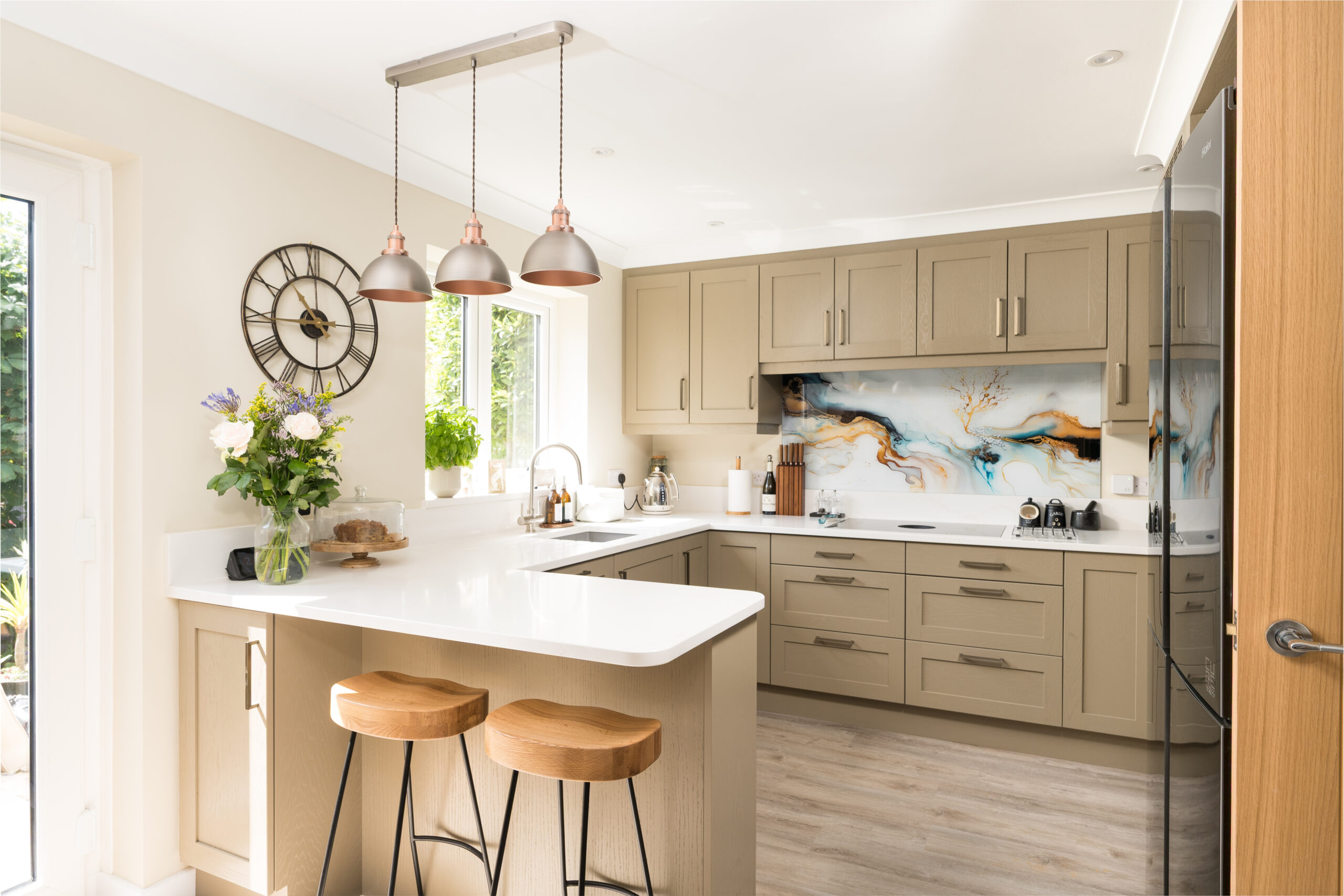
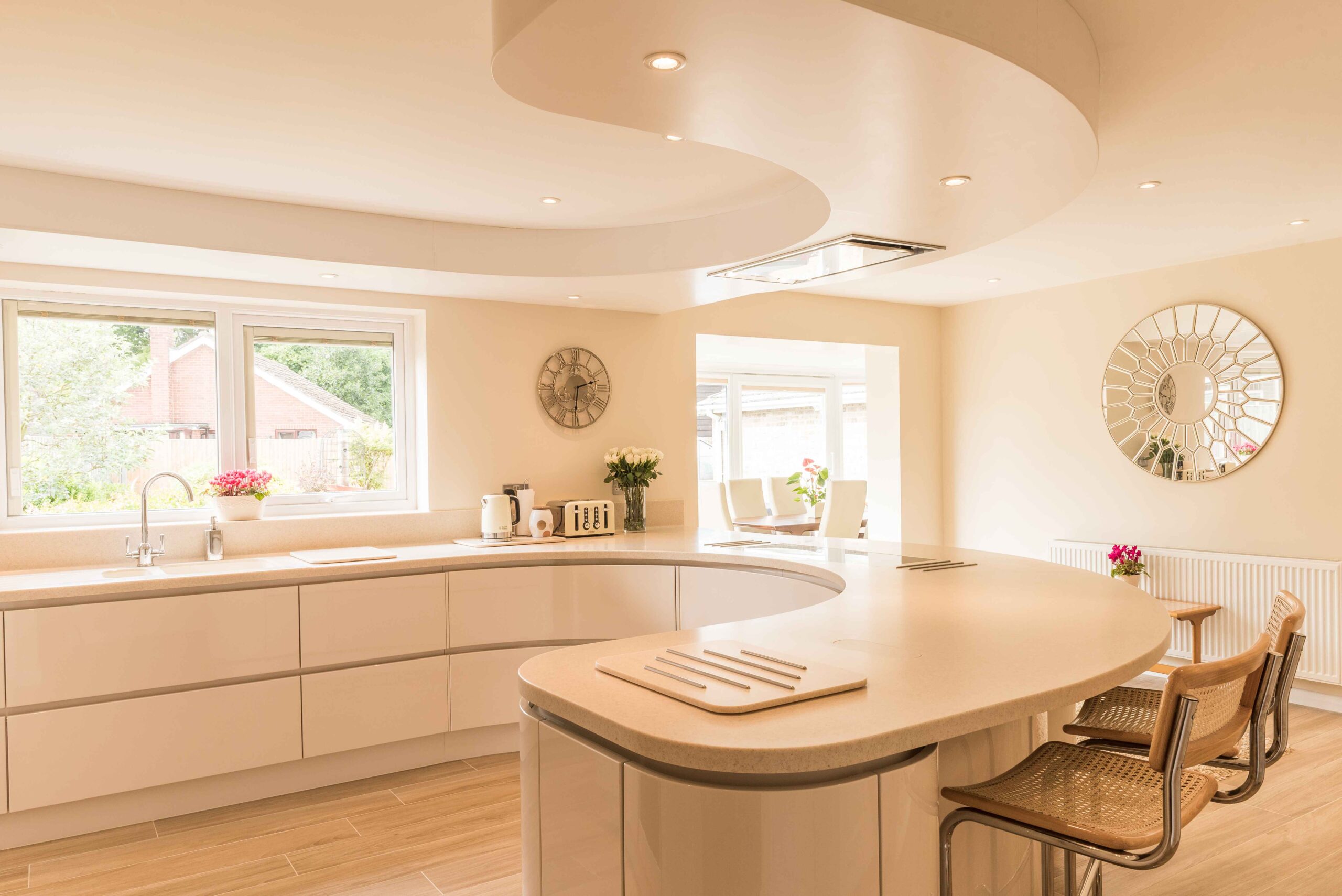
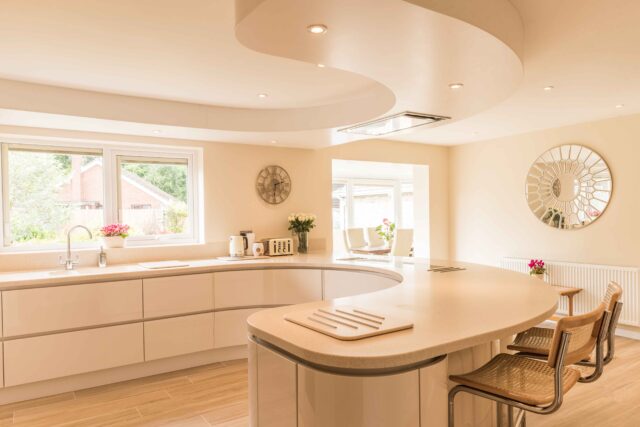
A peninsula extends from an L or U-shaped layout and projects into the room, creating a natural boundary without fully closing the space off. It gives you extra worktop, storage and usually seating, and it helps define the kitchen within a larger room without separating it from the rest of the home.
For rooms where a full island isn’t possible, a peninsula often gives you most of the same benefits. The difference is clearance. An island needs space on all four sides. A peninsula is fixed on one end, so it works in rooms where that full clearance isn’t available. It’s also a really natural place for informal seating, which changes how the kitchen feels when people are gathering rather than cooking.
Island
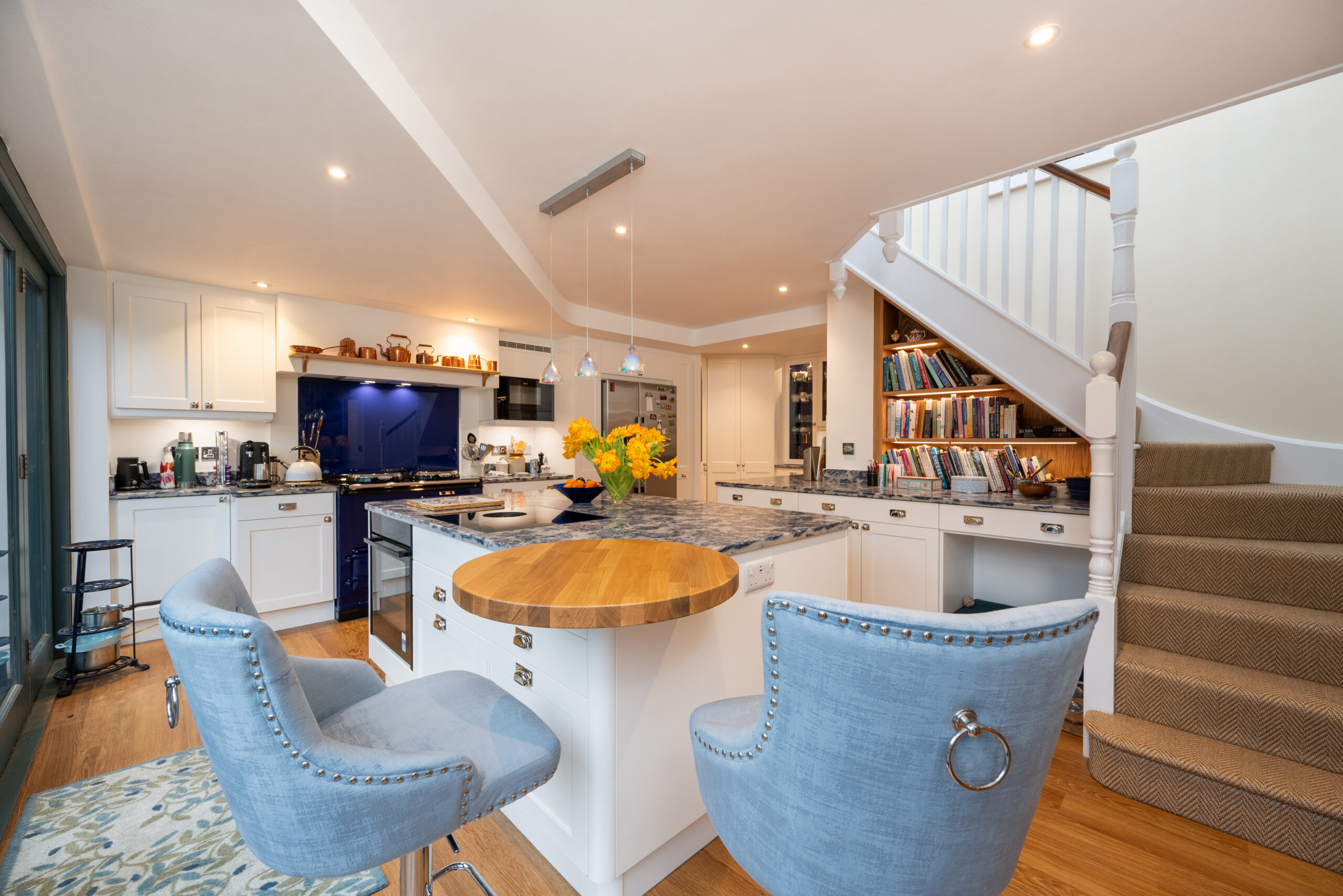
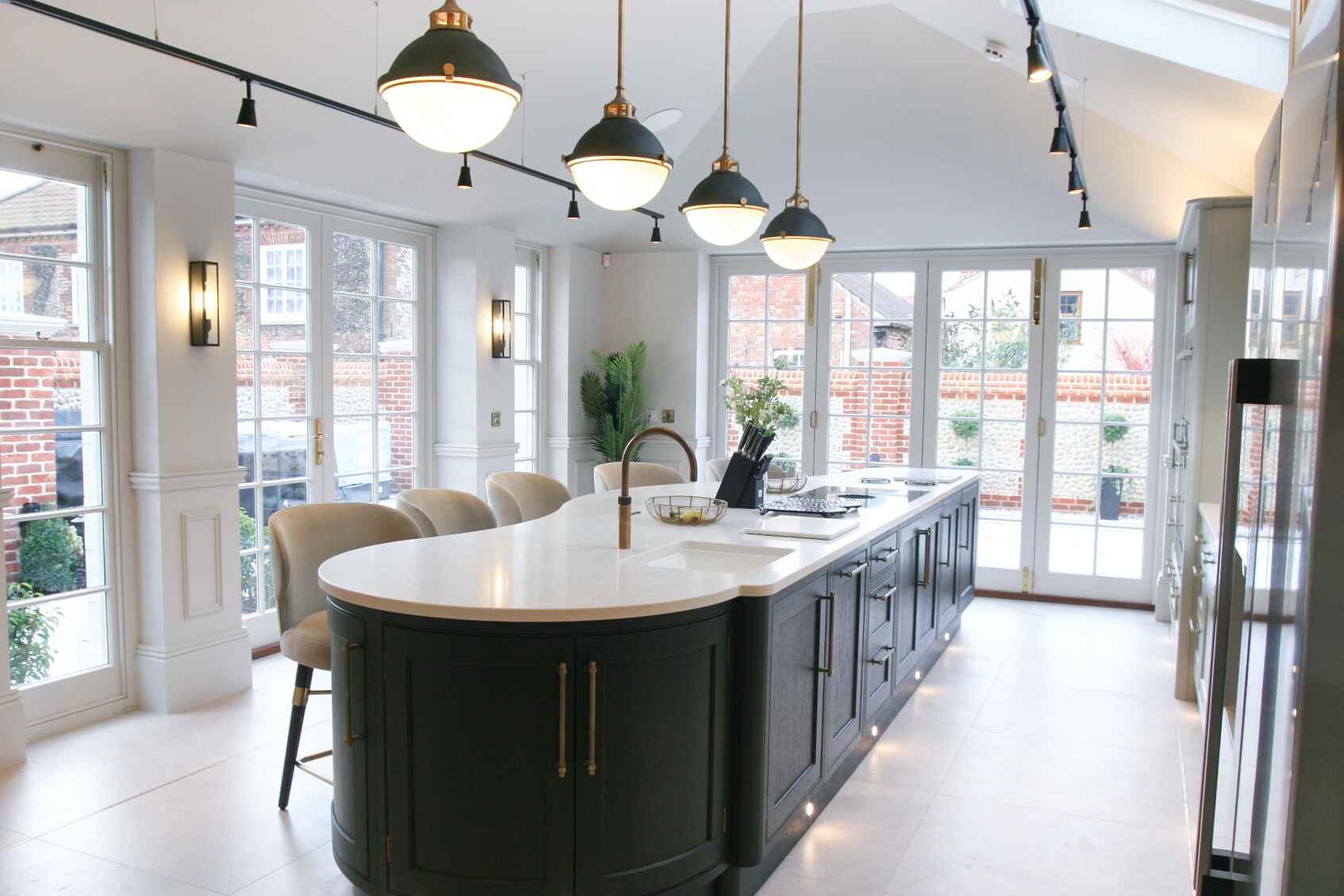
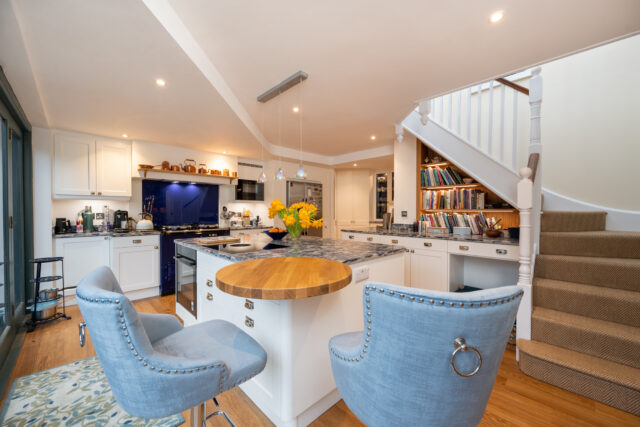
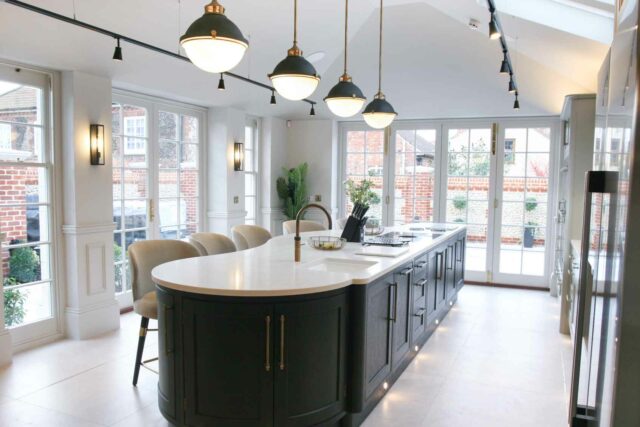
An island changes how a kitchen feels more than almost any other single decision. Cooking from an island means facing the room rather than the wall. You’re part of what’s happening around you rather than removed from it. Customers tell us regularly that it’s one of the things that makes the biggest difference to how they use the space every day.
A well-designed island can bring together preparation, storage, seating and even the hob in one place. As a guide, you want at least 90cm of clear space on each side, and ideally more. What matters most beyond that is how the island fits the whole layout and how it’s actually used day to day. In the right room it feels completely natural.
Open Plan
Most kitchens now sit within a wider living space, and that changes how layout decisions are made. It’s not just about how the kitchen works on its own. It’s about how it looks from the sofa, how it feels when you’re not using it, and how it connects to the rest of the room.
Sightlines matter here. So does lighting. The relationship between the kitchen and the spaces alongside it shapes the whole feel of the home. When the kitchen shares a design language with the dining area and sitting room, the whole space feels considered rather than assembled. It’s one of the things we enjoy thinking about most, because the decisions made here affect how the home feels every single day, not just when someone is cooking.
The best way to understand what is possible is to come and see it in person.
Visit us at our Norwich showroom and we will talk through your space, your ideas, and what might work for you. You can also call us on 01603417072, email enquiries@angliakb.co.uk or request a brochure to browse our work first.